

How much can a wallet really tell you before you sign? A transaction preview can show that tokens are expected to leave one address and arrive at another, but it cannot turn a risky smart contract into a safe one. That distinction matters for anyone using DeFi across Ethereum and its many EVM-compatible networks. Rabby’s Chrome extension is built around transaction simulation, security warnings and automatic network handling, features that can make complex actions easier to inspect. Their value, however, depends on what a simulation can observe—and on whether the user treats it as a check rather than a guarantee.
For users in Germany, where a wallet may connect to lending markets, decentralised exchanges and bridges across several chains, the useful question is not simply whether Rabby is “safer” than another wallet. It is which risks the interface can reduce, which remain outside its control, and what habits are still needed before approving a transaction.
Misconception: a simulation is a security guarantee
Rabby runs a pre-signing simulation intended to show the expected changes to token balances. In practical terms, that gives the user a chance to notice an unexpected transfer, an unfamiliar token approval or an outcome that does not match the intended action. This is useful because signing requests are otherwise difficult to interpret: the underlying transaction data is not written for ordinary readers.
But a simulation is an estimate of how a transaction is expected to behave under the conditions available when it is checked. It is not a guarantee of what will happen later. Blockchain state can change between simulation and execution; a contract may behave differently depending on state, inputs or external conditions; and a preview cannot establish that a project’s economic design is sound. If a transaction depends on a price, liquidity or contract state that shifts before inclusion, its realised result may differ from the preview.
The right mental model is therefore “additional inspection,” not “automatic protection.” A clear preview helps answer, “Does this expected outcome make sense?” It does not fully answer, “Is this protocol trustworthy?” or “Will the transaction still behave this way when it executes?” That boundary is important when approving token allowances. An approval can authorise a contract to spend tokens later, not just in the immediate action. Rabby’s security engine can flag risks such as infinite approvals, but users should still check which asset and spender an approval concerns and whether broad, persistent access is necessary.
Misconception: non-custodial means risk-free
Rabby is a non-custodial wallet developed by DeBank. Private keys are stored locally on the user’s device rather than sent to Rabby’s servers. This changes the custody model: the provider does not hold the keys in the way a custodial exchange does. It also means responsibility for protecting the device, recovery information and signing decisions rests with the user.
Local key storage does not prevent malware, phishing, a compromised browser or a user being persuaded to sign a harmful request. Nor does an open-source licence eliminate those risks. Rabby’s software is published under the MIT licence, which allows independent inspection, but open source is an opportunity for scrutiny—not proof that every release, dependency or installation is safe. Users still need to install the extension from a trusted source, keep their browser and device protected, and treat unexpected prompts with suspicion.
Hardware-wallet compatibility with Ledger, Trezor and OneKey can add a meaningful separation between browsing and key use: transaction signing is performed through a dedicated device. Yet a hardware wallet does not make a malicious transaction benign. It can protect the key from some forms of digital theft, but the user can still approve an unsafe action on the device. The strongest arrangement combines protected keys with careful review of what is being signed.
Why multi-chain convenience changes the risk picture
Rabby supports more than 140 EVM-compatible networks, including Ethereum, Polygon, Arbitrum, Optimism, Avalanche, Base and BNB Chain. It can detect the network a decentralised application requires and switch automatically. That removes a common source of friction: manually selecting a chain before connecting or transacting.
Convenience has a security trade-off. When switching networks becomes nearly invisible, users may pay less attention to where an action is happening. The same token name can refer to different assets on different networks, and a familiar dApp interface does not by itself confirm that the site or contract is authentic. The wallet’s warnings and simulation help, but users should verify the network, application domain and relevant contract details—especially before moving significant funds.
Bridge integrations such as LI.FI and an in-wallet swap aggregator can simplify moving assets between chains or comparing routes through decentralised exchanges. Aggregation may help find a route with competitive pricing or lower expected slippage, but it does not remove bridge, liquidity, smart-contract or execution risk. A cross-chain action may involve multiple steps and protocols; each can introduce a different failure mode. A single polished interface can make the route easier to use without making every component equally secure.
Gas Account, which allows fees to be paid with stablecoins such as USDC, addresses another practical obstacle: having funds on a network but not its native token for transaction fees. This can prevent a user from being stranded by a small gas shortfall. It also adds a service and transaction path that users should understand before relying on it. Convenience tools reduce operational friction; they do not erase the need to check fees, network and transaction outcome.
A practical review routine before signing
For a routine swap, first confirm the network and the asset you intend to exchange. Then compare the simulated balance changes with the action you initiated: the outgoing token, expected incoming token and any approvals should make sense. If the wallet flags a risk, pause to understand it rather than treating the warning as a box to dismiss. For a bridge, also consider the destination chain and whether you understand the route and protocols involved.
For unfamiliar contracts or large amounts, use a stricter standard. Check that you reached the intended application through a trusted route, inspect the approval’s spender and scope, and consider whether the action can be tested with a smaller amount. A simulation that looks plausible is one piece of evidence, not a substitute for due diligence. If the expected changes are unclear, that uncertainty itself is a reason not to sign yet.
Rabby’s core signing functions are described as able to operate independently of its backend, and the wallet does not create or alter transactions as an intermediary. That separation can matter during service outages: a backend issue need not automatically mean that local signing is impossible. But it does not imply every convenience feature, warning or data source remains available in every failure scenario. Users should distinguish the ability to sign from the availability of supporting services that make a transaction easier to inspect.
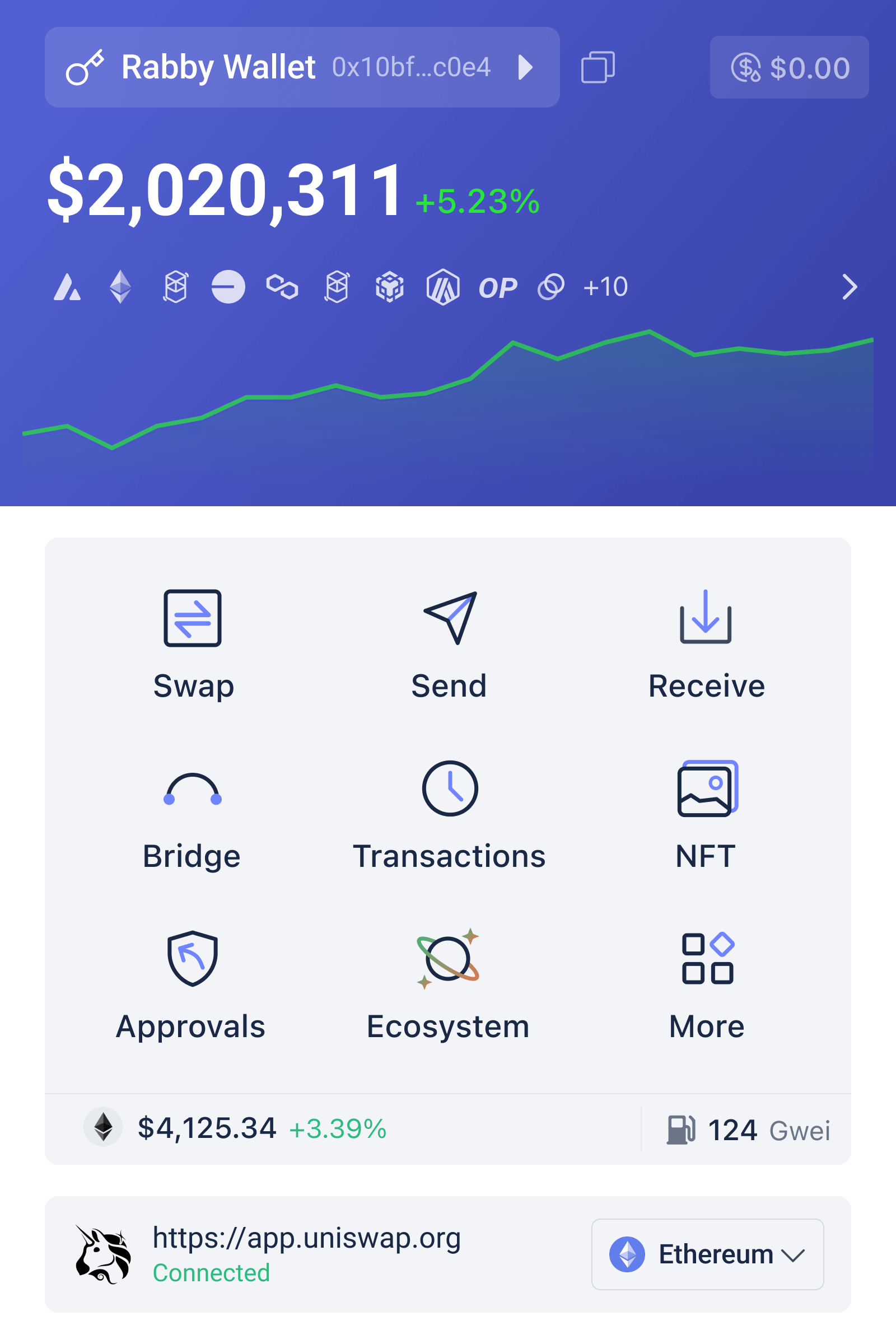
Those considering the rabby wallet can evaluate it as a multi-chain interface with pre-signing checks, rather than as a replacement for operational security. The Chrome extension is also available alongside versions for Brave and Edge, with desktop and mobile options. As with any wallet software, the exact experience depends on the version, network and dApp in use.
What user enthusiasm does—and does not—show
A recent user comment dated 15 October 2026 praised Rabby’s interface and described a switch from MetaMask. That is useful as a signal of individual experience: a clearer workflow can help users notice details they might otherwise overlook. But one user’s comparison does not establish that the wallet is universally safer, nor does a smoother interface prove better outcomes across different contracts, devices or habits. Usability can support safer decisions; it cannot make those decisions on the user’s behalf.
Rabby Points, earned through activities such as swaps, gas top-ups or referrals, are a separate consideration. A rewards programme may make repeated use more attractive, but rewards should not determine whether a transaction is suitable. When activity is incentivised, it is worth checking whether the action serves a real portfolio need rather than merely earning points. The same discipline applies to any wallet feature designed to make DeFi more convenient.
FAQ
Does Rabby’s transaction simulation guarantee that a transaction is safe?
No. It presents expected effects before signing and can help reveal outcomes that do not match your intent. It cannot guarantee future execution, validate a protocol’s overall trustworthiness or prevent every phishing, contract or device-level attack.
Does local key storage mean Rabby can never be involved in a security problem?
No. Local storage means private keys are not sent to Rabby’s servers, but the user’s device, browser, installation source and signing choices remain relevant attack surfaces. Non-custodial control reduces reliance on a custodian while increasing the importance of personal key and transaction security.
Is automatic network switching always safer than changing networks manually?
It can reduce confusion and unnecessary setup, but it may also make the active network less noticeable. Check the chain and asset context before signing, particularly when using a new dApp, bridge or token.
The useful distinction
A multi-chain wallet is both a key manager and a decision interface. Rabby’s simulation, warnings, hardware-wallet support and broad EVM coverage can make that interface more informative and reduce some avoidable mistakes. The boundary is just as important: simulations are conditional previews, open source enables review rather than guaranteeing correctness, and non-custodial control does not remove user-side risks. The practical advantage comes when convenience is paired with a repeatable habit—verify the network, inspect the expected changes, understand approvals, and pause whenever the transaction does not match your intent.
Add a Comment